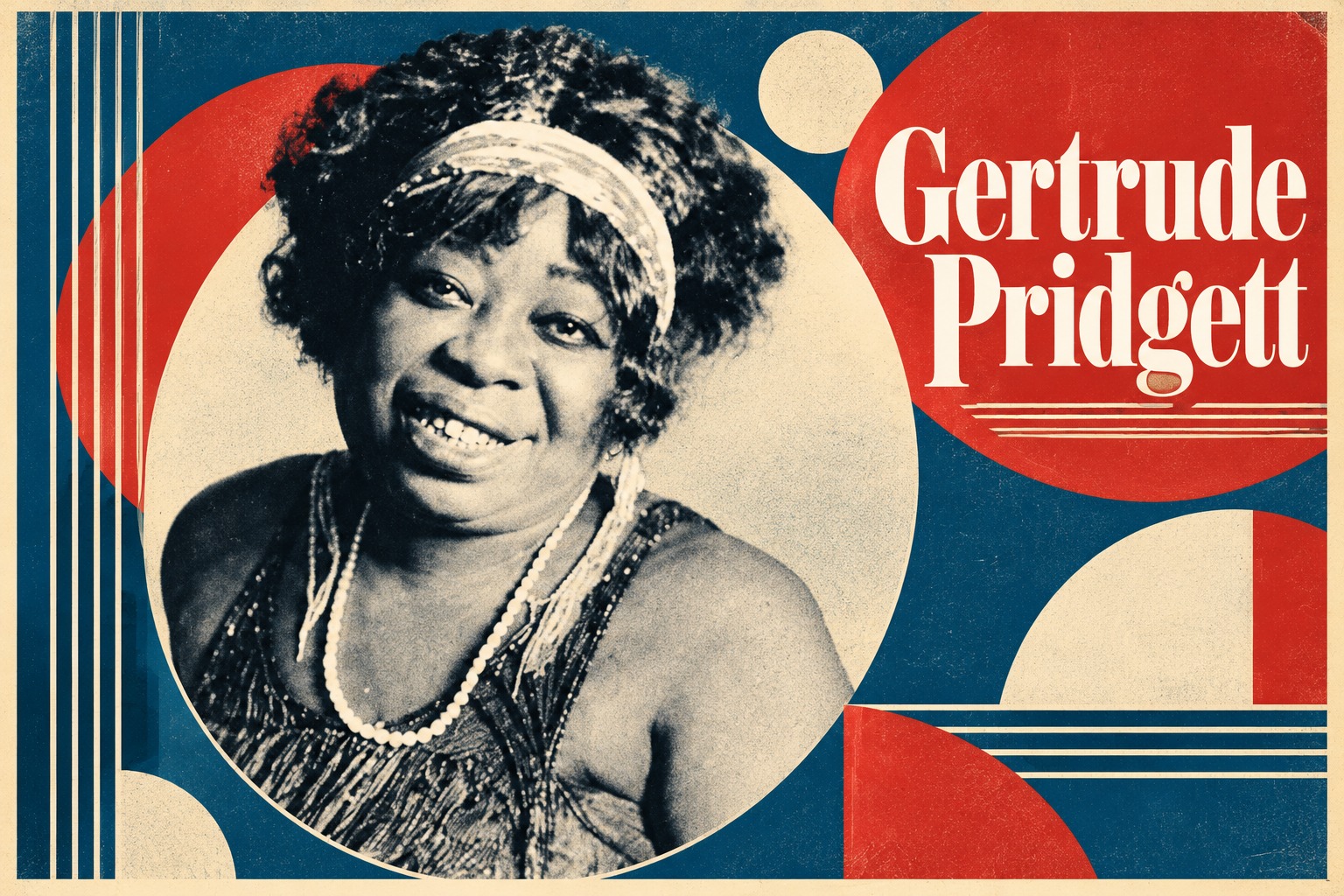
The Woman Behind the Blues Name
Gertrude Pridgett became known to audiences as Ma Rainey, one of the defining singers of classic blues. Her familiar title, the Mother of the Blues, expresses her influence rather than a literal family relationship with later performers. I find the distinction useful because her professional name can overshadow the woman, household, and touring life from which it emerged.
Her birth is commonly dated to April 26, 1886, in Columbus, Georgia, although some historical records leave room for different dates or places. She died on December 22, 1939. Between those dates, she moved from local performance into traveling shows, a successful recording career, and later involvement in theater businesses.
The recordings are only one part of that arc. Before she entered a studio in 1923, she had already spent years developing an audience on the road. Her voice reached records after it had learned to command a live room.
The Pridgett Family
Gertrude’s parents were Thomas Pridgett and Ella Allen Pridgett. Music and performance were present in the family, with Ella described as a singer and the household connected with traveling entertainment. Gertrude was the second of several children, commonly described as five, although the detailed identities of her siblings are less consistently established.
They do establish that music was not entirely foreign to her early environment. The stage grew out of a family setting where singing and performance already had a place.
As a young teenager, she began appearing in local revues and traveling minstrel, tent, and vaudeville shows. Those forms of entertainment supplied practical experience and access to audiences. They also place her beginning within a performance world different from the record centered music business associated with her later fame.
William Rainey and the Touring Partnership
In 1904, Gertrude married William Rainey, also called Will or Pa Rainey. They performed together as Ma and Pa Rainey. Her enduring stage name came from that partnership, joining marriage and professional presentation in a single billing.
The couple worked on the traveling show circuit, including associations with larger companies such as the Rabbit’s Foot Company. Their adopted son Danny traveled with the act as a young person. That detail brings a family relationship into the touring picture without requiring us to imagine the arrangements of every journey.
Gertrude and William separated around 1916. The marriage ended as a shared domestic arrangement, but the Ma Rainey name remained. I see the name as a piece of stage furniture she kept and made her own: an identity that outlasted the partnership from which it began.
Danny is the adopted child clearly named in the supplied account. Other suggestions that she cared for additional young people are less securely documented. Her maternal stage title therefore should not be used to invent a larger list of children.
A Recording Career Built on Stage Experience
Ma Rainey began recording for Paramount Records in 1923. Over the next several years, through 1928, she made more than 100 recordings. The number is significant because her studio career occupied a relatively concentrated period within a much longer performance life.
Songs associated with her include Bo Weevil Blues, See See Rider, and Prove It On Me Blues. Her phrasing, authority, and stage presence helped define the style now called classic female blues. I find that description more precise than pretending she created blues by herself. Her importance lay in how powerfully she performed and helped carry the form into professional recording.
The transition from tent shows to records also changed how audiences encountered her. A live performance depended on her presence in a particular town and theater. A recording could circulate beyond that room. The studio years preserved part of her work for listeners who would never see her perform.
Bessie Smith and the Difference Between Friendship and Family
Bessie Smith belongs in Ma Rainey’s professional and personal circle, not in her family tree. Their connection has been described as a friendship and an association between important blues performers. Accounts sometimes frame Rainey as a mentor, although the strongest versions of a discovery story are disputed.
Interpretations of their closeness vary, and a biography does not become richer by presenting an uncertain private claim as settled. What matters here is the connection between two women whose singing helped shape the same musical era.
Their names often appear together because they belong to the history of classic blues. That shared historical position can be described without making one the creation of the other. Each performer had an individual career.
Columbus and the Business Side of Entertainment
By the mid 1930s, Gertrude had returned to Columbus. She became involved with theater management or ownership, with accounts naming venues such as the Liberty, Lyric, and Airdrome. This later chapter adds a business dimension to a life often remembered only through singing.
She earned income through touring and recordings and invested in entertainment venues. Those facts do not establish a trustworthy numerical net worth. They do show that her work included economic decisions and ventures beyond the microphone.
Gertrude died on December 22, 1939, reportedly from a heart attack. Her recognition continued afterward. A United States postage stamp honored her in 1994, and she received a posthumous Grammy Lifetime Achievement Award in 2023. August Wilson’s Ma Rainey’s Black Bottom and its 2020 film adaptation also brought renewed attention, although a dramatic portrayal should remain distinct from a complete biography.
FAQ
Was Gertrude Pridgett the same person as Ma Rainey?
Yes. Gertrude Pridgett was the birth name of the performer widely known as Ma Rainey. Her stage name developed after her 1904 marriage to William Pa Rainey, when the couple toured as Ma and Pa Rainey. She retained the name after their separation.
Did Ma Rainey have a child?
The supplied family account identifies an adopted son named Danny, who traveled with the act as a young person. Claims concerning additional foster or adopted children are less firmly established. Her title Mother of the Blues refers to musical influence rather than a list of descendants.
When did she make her best known recordings?
Her main Paramount recording period ran from 1923 through 1928 and produced more than 100 recordings. Songs including See See Rider and Prove It On Me Blues belong to that body of work. Her professional performing experience began well before those studio sessions.


